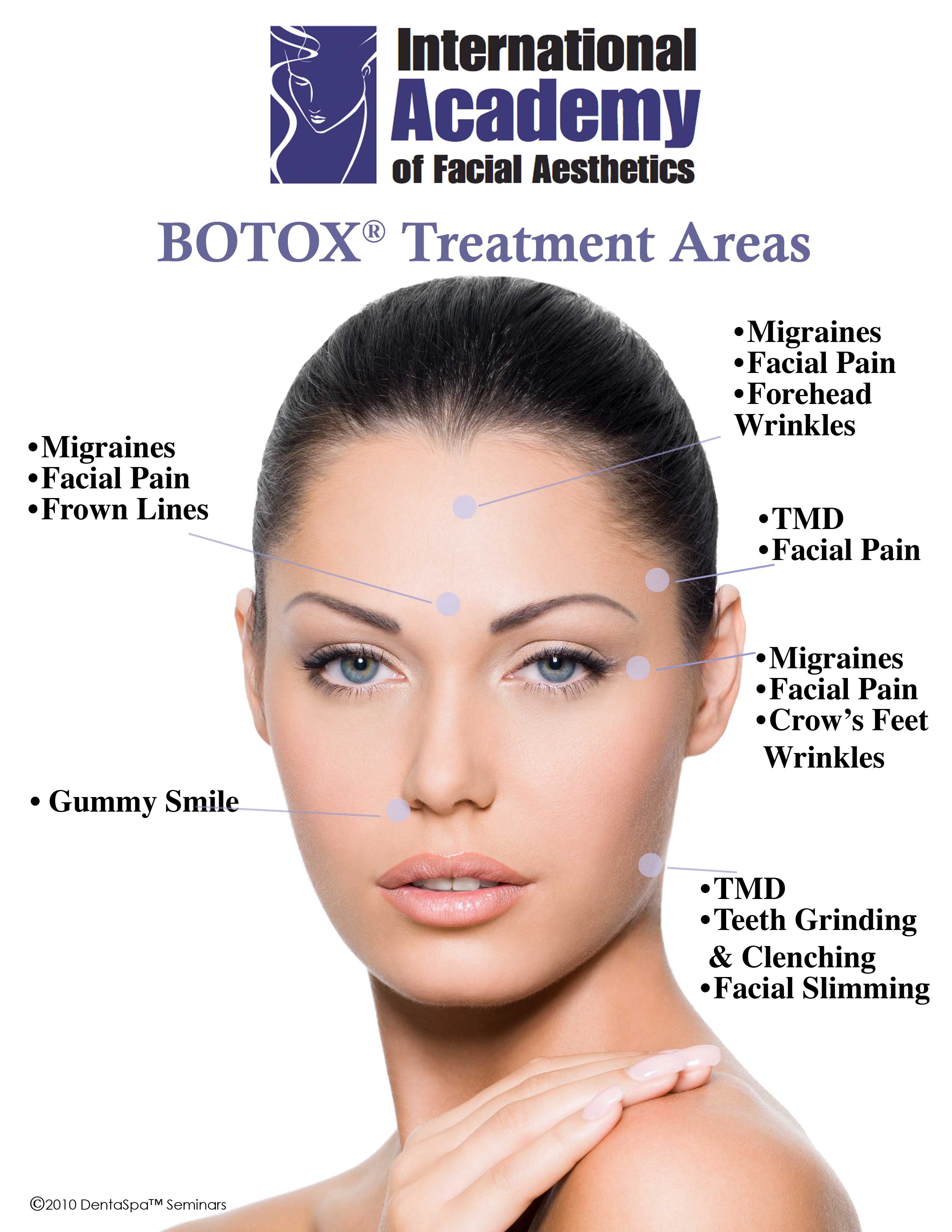
Lenz Family Dental is proud to offer Botox® to treat dental esthetic and therapeutic concerns in the maxillofacial areas. Our Dentists have been trained and are certified through the International Academy of Facial Esthetics.
What is Botox®?
Botox® is a trademark for Botulinum toxin A which is a muscle relaxant. Once injected it blocks the nerve signals that control muscle movement. This decreases the ability of the muscle to contract and thus softens the skin surrounding the injection site.
Where can Botox® be injected?
Botox® can be used to treat the following areas:
- Forehead wrinkles
- Temporomandibular Joint Disorder (TMJ)
- Clenching/Grinding/Bruxism
- Frown lines between the eyes
- Crow’s feet (wrinkles around the eyes when smiling)
- Fine lines/bags under the eyes
- Bunny lines
- Lip Augmentation (Lip flip, Gummy Smile)
- Sad smile
- Chin dimpling
Is Botox® painful?
Most patients report very minimal to no pain.
How long does it take for Botox® to work?
Botox® needs 2 to 14 days to start working.
How long Botox® last?
Botox® lasts 3 to 4 months. Individuals with higher metabolism (for example men and athletes) will need Botox® injections more often.
How much Botox® do you need?
Each patient is different. We will provide a consultation to help determine the areas you would like to treat and present a treatment plan.
How long is the procedure for one area?
The length of the procedure depends on the area and the amount of Botox® injected. One area takes around 5-10 mins.
What are the side effects?
Occasionally a small bruise at the site of the injection can occur and should disappear after a few days. A small minority of people may report a mild headache for a few hours or heaviness in the eyelid, which will resolve spontaneously after one week.
Can everyone have Botox®?
Botox® is a safe product however there are few people who need to avoid it:
- Allergy to Botox® (also known as Botulinum toxin type A)
- Allergy to human albumin.
- Active infection or inflammation in the skin area to be injected.
- Pregnant and breastfeeding women (best to be avoided, despite no real evidence)
- Patients with bleeding and blood disorders (Leukemia and Lymphoma)
- Patient on chemotherapy or immunosuppressant.
- Patient with neuromuscular disease (for example Amyotrophic lateral sclerosis also known as ALS, Myasthenia gravis, Lambert-Eaton syndrome)
- Patient taking the following medications: aminoglycosides, penicillamine, quinine.